Most families need this equipment for months, not forever.
Wheelchair ramps, stair lifts, hospital beds, scooters: dealers lead with buying new. For a recovery measured in months, renting or reconditioned is usually the smarter move, so that is where we start.
The 2-minute requestA personal reply within 2 business days
- 1Timeline: months or forever, decided first
- 2Fit: measured to the person and the home
- 3Source: rent, reconditioned, or new, in that order
Nobody asks how long you will need it. We start there.
Equipment for a surgery recovery, a stroke rehab, or hospice at home is typically needed for a stretch of months. Some needs are permanent, and that is real too. The answer changes what you should pay and who you should call, so the timeline comes first, before any catalog.
Months, or forever
Your care team's read on the recovery decides everything downstream. Three months of need should never be financed like ten years of ownership.
Measured, not guessed
Rise of the steps, width of the doorways, shape of the staircase, height of the bed. Equipment has to fit the person and the house, with real measurements.
Rent, recon, then new
We price the rental and the reconditioned unit before anyone quotes you new. When buying truly wins, we say so, with the arithmetic in front of you.
Where the equipment goes in a typical home.
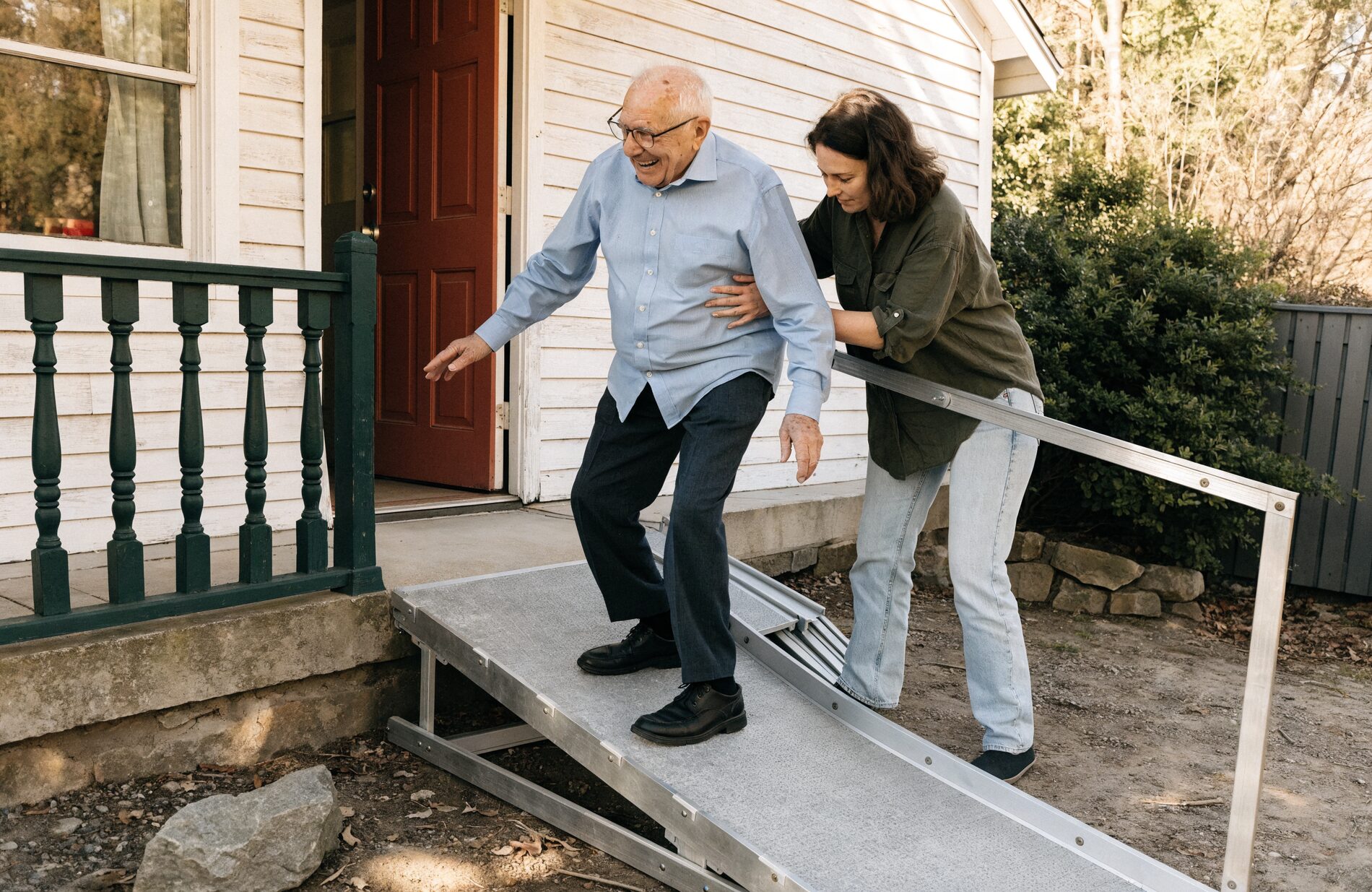
- 1Modular ramp at the entry. Aluminum sections, installed in hours, removed when the recovery ends.
- 3Hospital bed in a first-floor room. Often a Medicare rental when a doctor documents the need.
- 5Scooter for errands and appointments. Rentable by the week or month while strength returns.
- 2Stair lift on the staircase. Straight rails are standardized and often reconditioned; curved rails are custom-built.
- 4Grab bars in the bath. Placed for the person, anchored to structure, never suction cups for weight-bearing.
- 6The months clock. Typical recoveries run months, not years, which is why rental programs exist at all.
Rent it, buy it reconditioned, or buy it new.
Same equipment, three very different prices. Which one wins depends on the months, so we run that math with you instead of defaulting to the showroom.
Delivered, set up, and removed by the provider. Usually the win for needs under a year, and the only sensible way to try equipment before committing to it.
- ✓ Modular ramps, hospital beds, scooters, some straight stair lifts
- ✓ Delivery, setup, and removal handled
- ✓ Nothing to resell when the need ends
Inspected used units, serviced and resold with a warranty at a real discount to new. The option dealers rarely lead with, and the first one we price for stair lifts.
- ✓ Especially strong for straight stair lifts
- ✓ Ask what was replaced and what the warranty covers
- ✓ Professional install, same as new
Permanent needs, curved staircases that demand custom rails, and daily equipment that has to last for years. When new is right, you will hear it from us plainly.
- 01 Timeline decided with your care team
- 02 Home measured, doorway to staircase
- 03 Rental and reconditioned priced first
- 04 New quotes compared only then
- 05 Install by licensed local pros
Whatever the source, same promise. One request, one vetted introduction, or an honest “not yet.”

Home is the point.
The porch, the hallway, the bath: a few honest changes and the house works again for the person who loves it. That is the whole job, and it is worth doing calmly and well.
What each path really costs you.
No mystery pricing logic. Three ways to pay for the same equipment, each with a real place, and a free calculator to run your own numbers before you talk to anyone.
No lead auctions
Most "find a provider" sites sell your phone number to whoever pays, then four dealers call you during dinner. Your request here goes to one vetted provider, or to nobody until we have one worth sending.
No fear selling
You will not find scare statistics or urgency countdowns here. This is a season your family is walking through, and the plan should be made calmly, with your care team's guidance at the center.
If we do not have a vetted provider near you, we tell you that in plain words.
And we do not leave you stranded: we send you the same checklist we use to vet providers, free, so you can qualify a local company yourself. Licensing, insurance, install practice, rental terms, and the questions that surface a bad actor in one phone call.
A free access plan for your situation.
- ✓ The equipment list for your situation, piece by piece
- ✓ Rent, reconditioned, or new called honestly for each item
- ✓ The measurements and questions to have ready before any quote
- ✓ An introduction to a vetted local provider as coverage opens in your area
The 2-minute requestA personal reply within 2 business days
A vetted network, built carefully
We are building our network of local ramp, stair lift, hospital bed, and scooter providers right now, and we only pass your request to a provider we have actually vetted. If we do not have one near you yet, we say so plainly, and we send you the checklist we use so you can vet a local company yourself.
Built for the week the family is already stretched thin.
Timeline before price tags
The first question is how many months, not which model. It is the question that saves families the most money, and the one a showroom is least likely to ask.
Vetted, or we say not yet
We qualify providers on licensing, insurance, install practice, and how they treat rentals before we introduce anyone. No vetted provider near you? We say exactly that.
Free means free
Families never pay us. If a provider we introduce gets hired, they may pay us a referral fee. It never changes your price, and we disclose it right here rather than in a footnote.
Access Home Path is new, so we do not show customer reviews yet. The cards above describe how we work, not testimonials, and we will never invent one. Clinical decisions about what a person needs belong with their doctor, physical therapist, or occupational therapist.
Questions families actually ask.
Do most families really only need this equipment for a few months?
Very often, yes. Equipment for surgery recovery, rehabilitation after a stroke or fall, or end-of-life care at home is typically needed for a stretch of months rather than permanently. That is exactly why rental programs for ramps, stair lifts, hospital beds, and scooters exist. Some situations are permanent, and then buying makes sense. The point is to decide the timeline first, because it changes what you should pay. Your care team is the right guide on how long recovery is likely to take.
Is renting always cheaper than buying?
No, and we will not pretend it is. Renting usually wins for needs of a few months, because you avoid a large purchase for a short need and the provider handles delivery, setup, and removal. Past a break-even point, often somewhere around a year of continuous use depending on the item, buying new or reconditioned becomes cheaper. Our free rent-vs-buy calculator does this arithmetic for your actual numbers, and our plan tells you honestly which side of the line your situation falls on.
What is a reconditioned stair lift, and is it safe to buy one?
A reconditioned stair lift is a used unit that a dealer has inspected, serviced, and resold with a warranty, usually at a meaningful discount to new. Because straight stair lifts are largely standardized, reconditioning is a well-established part of the industry, and a reputable dealer will still install it professionally and warranty the work. The questions that matter: who reconditioned it, what was replaced, and what warranty covers parts and labor. Curved stair lifts are custom-built to a specific staircase, so reconditioned options are rarer there.
Will Medicare pay for any of this?
Sometimes, for some equipment. Medicare Part B covers certain durable medical equipment, such as hospital beds and, in defined circumstances, power mobility devices, when a doctor documents medical necessity and both the prescriber and the supplier are enrolled in Medicare. You typically pay 20 percent of the Medicare-approved amount after the Part B deductible. Wheelchair ramps and stair lifts are generally not covered by Original Medicare, because Medicare treats them as home modifications rather than medical equipment. Rules have exceptions and change, so confirm your specific case at medicare.gov or 1-800-MEDICARE before you plan around coverage.
Who actually installs the equipment?
Delivery and installation are done by the local provider you are connected with, not by Access Home Path. Ramps and stair lifts should be installed by trained installers, and work that modifies the home, such as structural grab bar blocking, belongs with a licensed contractor. Hospital beds and scooters are typically delivered and set up by the supplying company. We vet providers on exactly these points before we introduce anyone.
What does Access Home Path charge?
Nothing, to you. The access plan is free, and there is no obligation attached to it. If we introduce you to a provider and you hire them, that provider may pay us a referral fee, which is how services like ours are typically funded. That fee never changes your price, and we tell you plainly when we have no vetted provider near you rather than selling your request to whoever will pay for it.
Can you tell us what equipment my parent needs?
No, and you should be wary of anyone selling equipment who claims they can. What we do is practical: we organize the timeline, the measurements, and the sourcing options for the equipment your care team recommends. The clinical call, what a person needs for safe daily living, belongs with their doctor, physical therapist, or an occupational therapist doing a home assessment. We point you to those professionals and then make the practical side easier.
Three tools that do the arithmetic for you.
ADA Ramp Length Calculator
Measure your rise in inches and get the 1:12 ramp length, landings included, in plain feet.
Stair Lift Cost Estimator
Straight or curved, new or reconditioned or rented: see the typical published range before any showroom visit.
Rent vs Buy Calculator
Your prices, your months, the break-even point, and a plain answer about which path costs less.
Home, within reach.
Tell us the situation. We will map the equipment, price it the honest way, and connect you with vetted local pros as coverage opens in your area.
Get your free access planThe 2-minute requestA personal reply within 2 business days
And the promise holds: one request, one vetted introduction, or an honest “not yet.”
Every request is read and answered by a person, not a queue.